Climate change doesn’t happen in a void: finding the right tone to talk about it

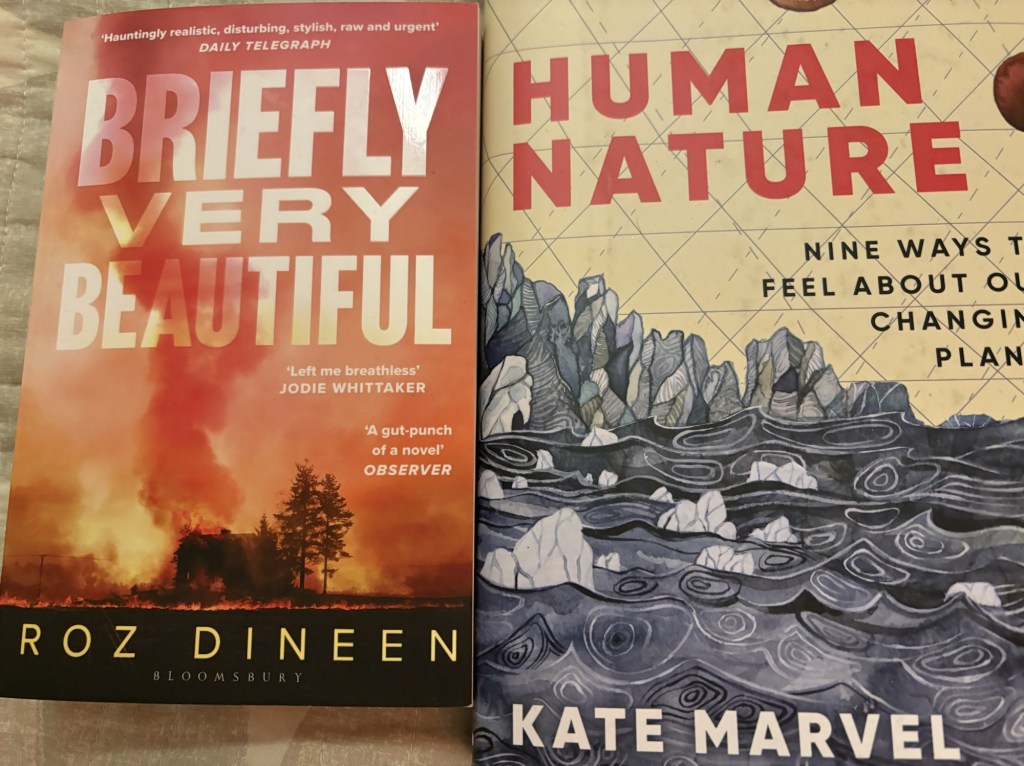
Recently, I read Human Nature by Kate Marvel and Briefly Very Beautiful by Roz Dineen almost back to back. Though very different in form and voice, reading them one after the other left me thinking about the human dimensions of climate change.

Kate Marvel is a climate scientist, and her book uses nine emotions (wonder, anger, guilt, fear, grief, surprise, pride, hope, and love) as a framework for explaining climate change, alongside stories from human history and her own life. Dineen’s book, in contrast, is a deeply personal and heartbreaking story of a mother’s love and efforts to protect her children in the face of environmental collapse.

Toward the end of Human Nature, Marvel reflects on a question many environmental professionals face: in which tone should we speak or write about climate change? I often stick to a strictly professional, emotionally neutral tone, partly because the weight of climate change and nature loss can be exhausting for people. Yet emotions are also a source of motivation and strength, and they affect whether change happens at all.

I think Marvel strikes this balance exceptionally well. Her book is one of the most compelling climate reads I’ve encountered for a while, and together with Dineen’s work, it was a timely reminder that clarity and emotion are not opposites, they are both essential.

One quote that stayed with me:

“Leaders made choices, people made mistakes, and until it happened, it might have always gone otherwise. But this is the whole point. We will never be able to do a clean experiment to isolate environmental factors from their political, historical, and societal contexts. Climate change never happens in a void. It happens to us.”

#climatechange #climatescience #climatenovel #climatecommunications #humannature #brieflyverybeautiful #environmentalchange #environmentalcollapse #emotions 

Sustainability 2026: Beyond the ”year of Omnibus”

As we wrap up the ”year of Omnibus,” what should we expect for corporate sustainability in 2026? My focus remains on the real-world impacts and the critical role of finance. 

Many have expressed concern about a dip in ambition after the EU streamlined certain reporting requirements. However, I believe that despite the so-called ”ESG backlash,” underlying issues like climate change and social inequity are only intensifying. This makes a structured framework more essential, not less.

The escalating cost of physical climate risks and social pressures across supply chains are not abstract concepts, they are fundamental to business continuity. Sustainability isn’t just a ”nice to have”, it is our most viable tool for translating real-world phenomena into corporate strategy and accountability

I remain also positive about the future of sustainability reporting. While it will take time for the market to settle with the updated CSRD/CSDDD expectations and voluntary reporting (VSME), we must remember where we started.

I remember five to ten years ago, the financial sector was constantly highlighting the lack of reliable sustainability data. You cannot price risk or allocate capital effectively without mandatory, assured, and standardized data. Because the financial sector (banks, insurers, and asset managers) needs this data for transition finance and systemic risk management, I believe market practice will demand high-quality disclosures regardless of regulatory changes and Omnibus. To me, the ongoing revision of the SFDR is a perfect example of this. It is not about lowering the bar, but rather refining the framework to keep up the pace with market needs and ensure it remains a credible tool for the transition.

My final key point is the role of SMEs. For sustainability to truly work, SMEs must be brought into the ”sustainability bubble” to access green finance. Value chain requirements, especially Scope 3 and social impact, are the most challenging but also the most transformative parts of EU regulation. Large companies must continue to engage and mobilize their smaller partners to provide auditable data. I am confident this will become standard practice, even with the current restrictions on information requests.

While disclosures are essential, so much is happening on a voluntary basis. For example, biodiversity is a field where many companies are now leading the way outside of mandates. I’ve seen this firsthand since starting our naturetech company, NaturAI Oy.

Let’s focus on cooperation and supporting one another in this field.

I wish everyone reading my blog a joyful holiday season and a wonderful new year!

#omnibus #sustainability #greenfinance #sustainablefinance #SFDR #greentransition #climate #humanrights #biodiversity 

Why companies need climate and environmental scenario analysis

The European Banking Authority (EBA) has published its Guidelines on Environmental Scenario Analysis. 

https://www.eba.europa.eu/publications-and-media/press-releases/eba-publishes-its-final-guidelines-environmental-scenario-analysis

Many in my network working in the banking sector are already familiar with these developments, but their implications for other industries are far less widely recognised. Although addressed to banks and investment firms, these guidelines may have implications beyond the financial sector. As the EBA notes, ”climate and other environmental risks, such as extreme weather events, ecosystem degradation, and growing pressures on land and water resource, pose considerable challenges for the economy”. These risks are already driving economic transitions that affect financial institutions and the companies they finance.

The guidelines outline expectations for how credit institutions and investment firms should assess their resilience to environmental risks, primarily climate-related physical and transition risks, through scenario analysis. Scenario analysis evaluates how different plausible futures might affect an institution’s strategy, operations, and risk exposure. It can be a straightforward “what if” exercise or a more advanced analysis backed by data, models, and narrative pathways. In all cases, it is designed to help organisations anticipate risks, strengthen preparedness, and identify emerging opportunities.

Environmental risks are becoming more material and can influence every financial-risk category. By setting common EU-wide expectations, the EBA aims to improve how these risks are recognised, assessed, and integrated. Although the guidelines are directed at banks, they may also influence the expectations placed on companies that rely on external financing, including how they assess environmental risks and the resilience of their business models.

Being proactive now helps companies stay ahead of evolving requirements, supervisory expectations, and market pressures. Conducting environmental scenario analysis can support access to capital, strengthen strategic planning, and offer a competitive edge as the transition to a low-carbon, resource-efficient economy accelerates. 

It is important not to underestimate the potential economic and business impacts of climate change and nature loss.

#biodiversity #climate #scenario #eba #banking #esgrisk #climaterisk #adaptation 

Millä keinoin Suomi voi saavuttaa päästövähennystavoitteet? 

Kuuntelin aamulla Suomen Ilmastopaneelin webinaaria, jossa esiteltiin paneelin laatimia suosituksia erityisesti taakanjakosektorin ja maankäyttösektorin päästövähennystoimiksi. Niillä päästöjen vähentäminen on ollut vaikeinta ja toimet herättävät paljon keskustelua. Päästökauppasektorilla päästöt ovat vähentyneet vauhdilla, mutta on tärkeää jatkaa energiatehokkuuden edistämistä ja teknologiakehitystä. 

Samoin kuin talouspolitiikassa, myös ilmastopolitiikassa pitää katsoa vaalikausien yli. Pitkäjänteinen ja ennustettava sääntely on myös yritysten etu. 

Liikenteeseen ilmastopaneeli suosittelee 

  • joukkoliikenteen, kävelyn ja pyöräilyn tukemista
  • liikenteen verotuksen uudistamista sähköistymistä tukevaksi
  • jakeluvelvoite on nostettava aiemman lainsäädännön mukaiseksi 

Maatalouteen paneeli suosittelee

  • typpilannoitusta tarkennettava ja vähennettävä
  • turvepeltojen vettämistä on laajennettava 
  • naudoille on annettava metaanipäästöjä vähentävää rehulisäainetta 
  • vähäpäästöisten työkoneiden hankintaa ja teollisuusalueiden latausinfran kehittämistä on tuettava
  • kevyen polttoöljyn jakeluvelvoite nostettava 30 %:iin

Maankäyttösektorille paneeli suosittelee

  • metsälakiin tulee kirjata hiilinielua vahvistavat käytännöt metsien käsittelyyn 
  • päästöjä lisäävälle maankäytön muutokselle on asetettava riittävän suuri maksu 
  • puunpolton verotuki on poistettava 
  • kannusteita on suunnattava metsäteollisuuden uudistumiseen 
  • turvepeltojen vettämistä on laajennettava 

Päästökauppasektorille paneeli suosittelee

  • päästökauppatulojen kohdentamista vaikuttaviin vihreän siirtymän toimiin 
  • bioperäisen hiilidioksidin teknisen talteenoton tukemista 

Koko raportti löytyy täältä 

Tilaisuudessa esitettiin hyviä yleisökysymyksiä/kommentteja muun muassa toimien kustannuksista ja luonnon huomioimisesta toimissa. Myös tekoälyn ja datakeskusten vaikutuksista kysyttiin. Ilmastopaneelin suositukset ovat hyvä pohja keskustelulle, jota epäilemättä syntyy ja monet toimet ovat poliittisesti vaikeita edistää. Tärkeää olisi katsoa, mistä löytyy sellainen kokonaisuus, johon on saatavilla riittävän laaja tuki ja riittävän laaja osallistujajoukko yhteiskunnassa. Kyseessä kun  on yhteinen ponnistus. Itse katson ehdotuksia myös sillä silmällä, että missä oma tai muut tuntemani startupit voisivat auttaa. Esimerkiksi tekoälyn avulla voidaan optimoida monia järjestelmiä ja toimia. Tarvitsemme myös uusia näkökulmia toimintatapoihin ja uutta liiketoimintaa. 

#ilmasto #ilmastopaneeli #päästökuilu #taakanjakosektori #maankäyttösektori #päästökauppa #päästöt #ilmastopolitiikka #luonto #tekoäly 

Taksonomian päivitys: hiljainen hiipuminen vai uusi alku? 

Komissio julkaisi kesällä täydentävän delegoidun asetuksen taksonomiasta. Asetus tulee voimaan ensi vuoden alusta hyväksymisperiodin jälkeen. 

Muutokset koskevat raportointia ja isompaa remonttia taksonomian kriteereihin vielä odotellaan. 

Komissio toteaa delegoidun säädöksen johdannossa, että rahoitusala tarvitsee useita vuosia EU taksonomian sisäistämiseen ja tarkan ja täyden raportoinnin tuottamiseksi. Rahoitusalan raportoinnin odotetaankin paranevan tulevina vuosina, kun datavirrat vakiintuvat ja datan kattavuus paranee. Tosin Omnibus nimenomaan vähentää datan kattavuutta ja saman tekee taksonomiaraportointiin ehdotetut muutokset, joskin molemmissa on myös paljon hyvää. 

Taksonomian päivityksessä muutetaan ainoastaan yhtä kriteeriä eli yleistä pilaantumisen ja kemikaalien ei merkittävää haittaa -kriteeriä (DNSH) . Se on koettu usealla toimialalla suhteettoman hankalaksi. Jatkossa myös muita DNSH-kriteereitä tullaan tarkastelemaan ja mahdollisesti yksinkertaistamaan. Aiemmissa EU:n kestävän rahoituksen foorumin raporteissa onkin ollut työhön hyviä eväitä. DNSH on nähdäkseni saanut suuremman painoarvon käytännön soveltamisessa, kuin mikä ehkä oli alkuperäinen ajatus. Sama koskee osin sosiaalisia vähimmäissuojatoimia. 

Komissio ottaa taksonomiassa käyttöön olennaisuusrajan. Tämä on uusi ajattelutapa suhteessa taksonomian alkuperäiseen ideaan. Kestävyyssiirtymä yrityksen sisällä alkaa usein niin, että toiminta on alkuun pientä. Taksonomiassa ei alunperin ollut olennaisuusrajaa, jotta kaikki kestävä toiminta tulisi näkyväksi ja samasta syystä taksonomia ei ole yrityskohtainen, vaan kriteerit on luotu toiminnoille. Raportointi pienistä virroista on kuitenkin koettu niin työläänä, että 10 % olennaisuusrajaa voi jatkossa soveltaa kuhunkin tunnuslukuun (KPI) erikseen. Lisäksi ei-rahoitusalan yhtiöt voivat jättää operatiiviset menot kokonaan raportoimatta, jos ne ovat yrityksen liiketoimintamallissa epäolennaisia. 

Myös rahoitusalan tunnuslukuja muutetaan. Tästä johtuen raportointiin tulee epäjatkuvuutta eli rahoitusalan raportoimat taksonomiaosuudet saattavat nousta, mutta eivät ole vertailukelpoisia aiempiin vuosiin. Ne yhtiöt, joilla ei ole taksonomiaraportointivelvollisuutta (eli pk-yhtiöt ja osa suuremmistakin)  poistetaan GAR:n nimittäjästä. Rahoitusala saa kuitenkin sisällyttää tunnuslukuihin taksonomiaa vapaaehtoisesti raportoivien yhtiöiden luvut. Rahoitusalalle on myös mahdollista jättää taksonomia kahden vuoden ajan raportoimatta, mikäli eivät rahoita taksonomian mukaisia kestäviä toimintoja. 

Varmasti monella herää kysymys, mikä on taksonomian merkitys jatkossa. Itse ajattelin aiemmin, että taksonomian merkityksen ratkaisee soveltamisalan laajeneminen. Raportoinnin sijaan huomio kannattaa kuitenkin  kiinnittää kriteerien ja koko kehikon toimivuuteen. 

Komission mukaan vuonna 2024 raportoitiin 250 miljardin edestä taksonomian mukaisia investointeja ja se tarkoittaa 34 % kasvua edelliseen vuoteen. Ottaen huomioon ilmastokriisin etenemisen ja suuren tarpeen sekä päästöjen vähentämiseen, että sopeutumiseen, tämän kasvusuunnan soisi jatkuvan. Taksonomiakriteereissä on omat puutteensa, joita voidaan korjata, mutta isossa kuvassa taksonomiassa on kyse samoista asioista, joita tulee joka tapauksessa tehdä ilmastonmuutoksen takia. 

#eutaksonomia #kestävyysluokittelu #omnibus #ilmasto 

About the costs of climate change, hidden or not 

Climate change has widespread but often overlooked economic and social costs, particularly in how it affects human capital development, labor productivity, and educational outcomes. In his book ”Slow Burn – the Hidden Costs of a Warming World” R. Jisung Park gives an economist’s view on the everyday implications of climate change and what it will cost us. But before telling more about Park’s book I want to remind of an interesting Finnish research publication, exploring the costs of climate change for Finland. The KUITTI project assessed the direct and indirect costs of climate change risks for Finland a few years ago. 

https://julkaisut.valtioneuvosto.fi/handle/10024/164032

The key takeaway for me from Kuitti was that slowly changing operating conditions, driven by rising temperatures and changes in precipitation, known as chronic physical climate risks, can cause significantly greater economic damage than extreme weather events if adaptation remains insufficient. The KUITTI project highlights that proactive adaptation is worthwhile. So, we should not only look at climate catastrophe events, but try to better understand the costs of chronic risks and also the hidden costs Park writes about.

Even though I don’t agree with some conclusions that Park makes based on statistics, I can recommend this book, if you are interested in learning more about the costs were are facing with rising temperatures and how the costs occur. 

Debates over proper adaptation will increase in the future, also in countries where the most visible climate hazards do not occur. 

Having a clearer picture of physical climate risks of an area is a good start but it is not enough. We also need to learn about socioeconomical details of climate vulnerability. The hotter temperature is not the only thing hurting us, but also how it impacts human institutions, economic, educational, legal, and political. 

In his book Park analyzes the negative effects global warming has on learning and human capital. Global warming and education is a topic not covered very often and I found it interesting. Rising temperatures and climate-induced disruptions, such as heat waves and school closures, are not just environmental challenges but economic issues. These factors silently undermine learning, reduce cognitive function, and limit future earnings potential, particularly for vulnerable populations. Forest fires are one example in the book too. The smoke has severe costs, not only the flames. 

Park also writes about justice. According to Park, at least two dimensions of climate justice are in danger of being overlooked within the prevailing narrative.The first is the highly local way in which climate change may vary. The second is that we still know little about why some groups are hurt more than others and how the impacts spread across the global economy through interlinkages. These questions go beyond the familiar thinking that poor countries and poorer people suffer more. 

Also for those interested in supply chains and housing markets, Park offers food for thought. 

We need to shift perspective. Climate change is not just about extreme weather events or long-term sea level rise; it is already affecting daily life, workforce performance, and social mobility according to Park. He calls for integrating climate resilience into education, labor policies, and infrastructure planning to mitigate these hidden costs.

#climatechange #adaptation #resilience #climatejustice #economics #physicalrisks #transitionrisks #policy 

About Climate Issues in Corporate Boards

Tere is so much talk about climate and corporates nowadays that one could almost assume every company has a climate governance in place. The Harvard Business Review article “How Robust Is Your Climate Governance?” reveals that the practice of climate governance varies widely. The article is based on corporate disclosures and interviews conducted by the authors. It outlines key features of effective board engagement in climate governance. 

The article provided me with plenty of insights, which is why I want to share the key points I found most significant.

https://hbr.org/2024/11/how-robust-is-your-climate-governance

Five points I like to highlight based on the HBR article:

1 Understanding the climate-profile of the company 

The article actually talks about understanding the double materiality of climate issues. How the company affects the climate and climate-related matters, and how climate and climate-related matters affect the company. Both risks and opportunities should be analyzed. 

The authors also reflect on climatepositioning and targetsetting. According to the authors all companies don’t need to be frontrunners. In my opinion, however, just following regulation can also mean a lot of work and changes to business as usual. Also for smaller companies understanding their climate profile may be essential due to the many expectations in their value chain. 

2 Climate issues part of the board’s mandate 

Establishing clear responsibilities within the board for climate-related issues helps to ensure that climate considerations are integrated into corporate governance. The authors recommend assigning different aspects of climate oversight to different committees within the board. Board oversight of at least some climate issues is increasingly expected also by many stakeholders. 

3 The need for climate-related knowledge and experience in the boardroom

I agree with the authors of the need for continuous learning because the field is evolving so rapidly. However, I see more opportunities than the authors in having a specialist in the board for companies spesifically in sectors where climate is a fundamental question. There will still be need for educating the whole board too. 

4 Incorporating  climate into executive performance evaluation

This is a much debated issue. The authors point out that their experience with companies that tie compensation to climate metrics is that the very act of doing so gives the organization a reason to better measure and track the metrics.

5 Aknowledging the challenges of climate governance 

It’s sometimes said that climate targets and policies are difficult or even impossible to set because the lack of real data. There are a lot of uncertainties in the world. Also trade-offs are present. But boards still need to make decisions based on available information. 

Having a clearly articulated climate positioning  of the company can help balance the decision-making in difficult topics. 

I consider these elements crucial for companies aiming to strengthen their climate governance frameworks and effectively address climate-related challenges. If you need someone specialised in above mentioned topics in your board, I’m a certified board member. 

#climate #boardwork #governance #climatepositioning #climaterisks #opportunities #climatetargets #oversight #hbr

New method for assessing physical climate risk to business and finance

I found this paper on physical climate risk assessment published in Nature Communications very interesting and I assume also my network of climate and sustainability experts as well as risk experts might be interested.

https://www.nature.com/articles/s41467-024-48820-1

Researchers use acute physical climate risks in Mexico as a case study and show how easily physical climate risk of portfolios can be underestimated when using climate risk scores. There is a need for more precise analysis of firms’ different locations and business lines. Sectoral or geographical climate scores are not necessarily enough.

There will always be some limitations and uncertainties in assessing climate risks on a business or financial asset level, but it is still important to develop assessment methodologies. They are needed for the design of policies and financial instruments aimed at building resilience to climate change and filling the adaptation gap. As the researchers say in an interview, we may be seriously underestimating the financial resources needed for climate adaptation.

https://www.news.uzh.ch/en/articles/media/2024/Climate-Risk-Assessment-Methods.html

#climate #adaptation #risk #physicalrisk #acute #chronical #methodologies #financing

An overview of adaptation taxonomies

Already in the early stages of the EU Taxonomy I was specifically interested in the adaptation criteria. And also a bit worried how companies would succeed to use them. For me they seem somewhat complicated without clear thresholds such as those included in the mitigation criteria. When the EU taxonomy was being formulated, adaptation didn’t gather significant attention.

I’m thankful for a true adaptation specialist Maaria Parry who recommended this analysis of adaptation taxonomies (written by University of Oxford experts) to me. Climate adaptation is a must whether we want it or not.

https://papers.ssrn.com/sol3/papers.cfm?abstract_id=4874598

Here are some main points of the analysis which I find important.

  • There are 24 adaption taxonomies published in the last four years
  • Growing adaptation finance gap is around 194-366 billion USD per year
  • The lack of understanding and standardized definitions of what is and is not adaptation is one of the barriers to adaptation finance
  • A difference to mitigation is that adaptation is location-specific and dynamic and requires a process-based component

In the analysis some common features and differences of the 24 adaptation taxonomies are pointed out.

  • Taxonomies include typically activities that are adapted and activities that enable adaptation
  • Some include even a third type of activity, activities that share goals with adaptation and development
  • Certain principles are common, such as risk assessment, DNSH, plans and targets
  • The least mentioned principle is alignment with net-zero
  • Some taxonomies include a list of eligible activities and some not
  • There is also variation in the sectoral coverage, eg the EU Taxonomy misses some sectors relevant for adaptation, such as agriculture

As recommendations the analysis suggests clear international principles for taxonomy development, richer lists of eligible activities and through forming a global inventory of adaptation investments addressing the question ’what is an effective adaptation intervention for a specific climate-related risk and specific asset type?’

Thanks for an interesting paper and I recommend all interested in climate risks, resilience and adaptation to read this and pay attention to finance taxonomies possible role in making our societies and businesses more climate resilient. Still a lot to achieve there I guess.

#eutaxonomy #taxonomy #adaptation #resilience #sustainablefinance #comparison #futuredevelopment #climate

Ilmastonmuutos turvallisuuskysymyksenä

Nykyisessä geopoliittisessa ympäristössä turvallisuuskysymykset ovat korostuneet ja ilmastonmuutoksen yhteys turvallisuuteen on saanut enenevässä määrin huomiota. Myös sotilasliitto NATO pyrkii ymmärtämään ilmastonmuutoksen vaikutuksia turvallisuuteen ja otti asian agendalle pari vuotta sitten.

Joshua W. Busby analysoi kirjassaan ”States and nature, The Effects of Climate Change on Security” mitkä tekijät vaikuttavat siihen, aiheuttaako ilmastonmuutos konflikteja tai muita turvallisuusvaikutuksia. Ilmastonmuutos lisää äärimmäisiä sääilmiöitä, kuten rankkasateita, tulvia ja kuivuutta. Ilmastokatastrofitapahtumat eivät suoraan johda konflikteihin, vaan seuraukset turvallisuudelle riippuvat monista muista tekijöistä. Seuraukset eivät ole välttämättömiä, vaan yhteiskunta ja eri toimijat voivat vaikuttaa paljonkin ilmastotapahtumien seurauksiin.

Kirjassa vertaillaan samankaltaisia tapahtumia kahdessa eri maassa ja analysoidaan, mistä erilaiset seuraukset mahdollisesti johtuivat. Somalia ja Etiopia ovat molemmat kohdanneet useita kuivuusjaksoja, jotka ovat pahimmillaan johtaneet nälänhätään. Myös Syyriaa ja Libanonia verrataan kuivuuden seurausten osalta, jotka Syyriassa johtivat lopulta sisällissotaan. Myanmar, Bangladesh ja Intia ovat kaikki kohdanneet useita pyörremyrskyjä, joiden uhrimäärä on vaihdellut esimerkiksi riippuen maiden kyvystä ennakoida tapahtumat sekä varoittaa ja evakuoida kansalaisiaan.

Ilmastotapahtumien seurauksiin kytkeytyviä tekijöitä ovat esimerkiksi poliittisen osallisuuden taso maassa, valtioiden kyvykkyys varautua ja auttaa kansalaisiaan ja kansainvälisen avun perille saaminen. Ilmastonmuutos aiheuttaa todennäköisimmin kielteisiä seurauksia turvallisuudelle niissä maissa, joissa valtion kyky tarjota apua kansalaisille on rajallinen, ja joissa demokratia on heikkoa ja poliittiset instituutiot tukevat vain tiettyjä väestöryhmiä, ja joissa ulkomainen apu on estetty tai se kanavoidaan yksinomaan tietyille ryhmille. Konfliktien lisäksi seurauksina voivat olla talouskasvun hidastuminen, maansisäinen tai maiden välinen muuttoliike, ruoan hinnan nousu ja nälänhätä. Ja nämä kaikki seuraukset voivat tarjota maaperää konflikteille.

Kirja korostaa, että ilmastonmuutoksen ja turvallisuuden yhteys ei ole vain niiden valtioiden asia, kuten Tyynenmeren saarivaltiot, joiden olemassaoloa ilmastonmuutos uhkaa, vaan koskee kaikkia maita esimerkiksi erilaisten ketjuvaikutusten kautta. Mikään maa ei ole suojassa ilmastonmuutoksen vaikutuksilta.

Osaan ilmastoriskeistä ihmiskunta on paremmin valmistautunut, mutta kirjan mukaan yleisesti tiedämme vielä vähän ilmastoturvallisuusriskeihin varautumisesta. Asia kytkeytyy myös ympäristönsuojeluun rauhanvälityksen osana ja tällöin huomiota kannattaa kiinnittää esimerkiksi luonnonvarojen hallinnan kaltaisiin kysymyksiin.

Kirjassa sivutaan myös ilmastoskenaarioita ja korostetaan järkevien skenaarioiden merkitystä ja skenaariotyön vaikeutta erityisesti ilmastonmuutoksen kroonisten fyysisten vaikutusten osalta. Liian pessimistiset skenaariot luovat kuvaa, että mitään ei ole tehtävissä, vaikka se ei olisi totta. Yksittäiset akuutit ilmastokatastrofit saavat eniten huomiota ja todennäköisesti vaikeinta onkin luoda skenaarioita kroonisten hitaampien vaikutusten osalta. Erityisen vaikeaa on lopulta arvioida, miten me ihmiset erikseen ja yhdessä yhteiskuntana reagoimme ilmastonmuutoksen vaikutuksiin. Tämä herätti minussa paljon ajatuksia, sillä rahoitusalaan kohdistuu paljon odotuksia ja vaateita skenaarioiden käyttämisestä ilmasto- ja ympäristötyössä.

Kirjan luettuani päällimmäisenä nousi mieleen kolme ajatusta:

Demokratiakehityksen tukeminen globaalisti on ensiarvoisen tärkeää ei vain ihmisoikeuksien takia, vaan myös raadollisemmin ilmastonmuutoksen aiheuttamiin turvallisuusuhkiin varautumiseksi. Monenkeskinen kansainvälinen yhteistyö ja kansainväliset instituutiot, joihin nuorena opiskelijana laitoin uskoni ja joiden parissa sainkin pitkään työskennellä, tarvitsevat vahvistamista. Olkoonkin, että prosessit ovat pahimmillaan hitaita. Oikein muita vaihtoehtoja ei globaaliin kehitykseen vaikuttamiseksi ole.

Ilmastonmuutokseen sopeutumiseen kannattaa kaikkialla panostaa, sillä pahimmillaan huono sopeutuminen johtaa turvallisuusuhkiin. Sopeutuminen ei ole luovuttamista ilmastonmuutoksen hillinnän osalta. Sopeudumme yhteiskuntina kansainvälisesti, kansallisesti ja alueellisesti. Jokainen voi myös miettiä, miten itse yksilönä edistää sopeutumista.

Ja lopuksi, elinkeinoelämällä ja yrityksillä on merkittävä rooli kahden edellisen kohdan toteuttamisessa.